
What Is Creeping Charlie and Why Is It a Problem for Your Lawn
Creeping Charlie, also known as ground ivy, is a perennial weed from the mint family (Lamiaceae). It was originally introduced from Europe and has since spread across most of the United States and Canada, particularly in cool, moist climates.
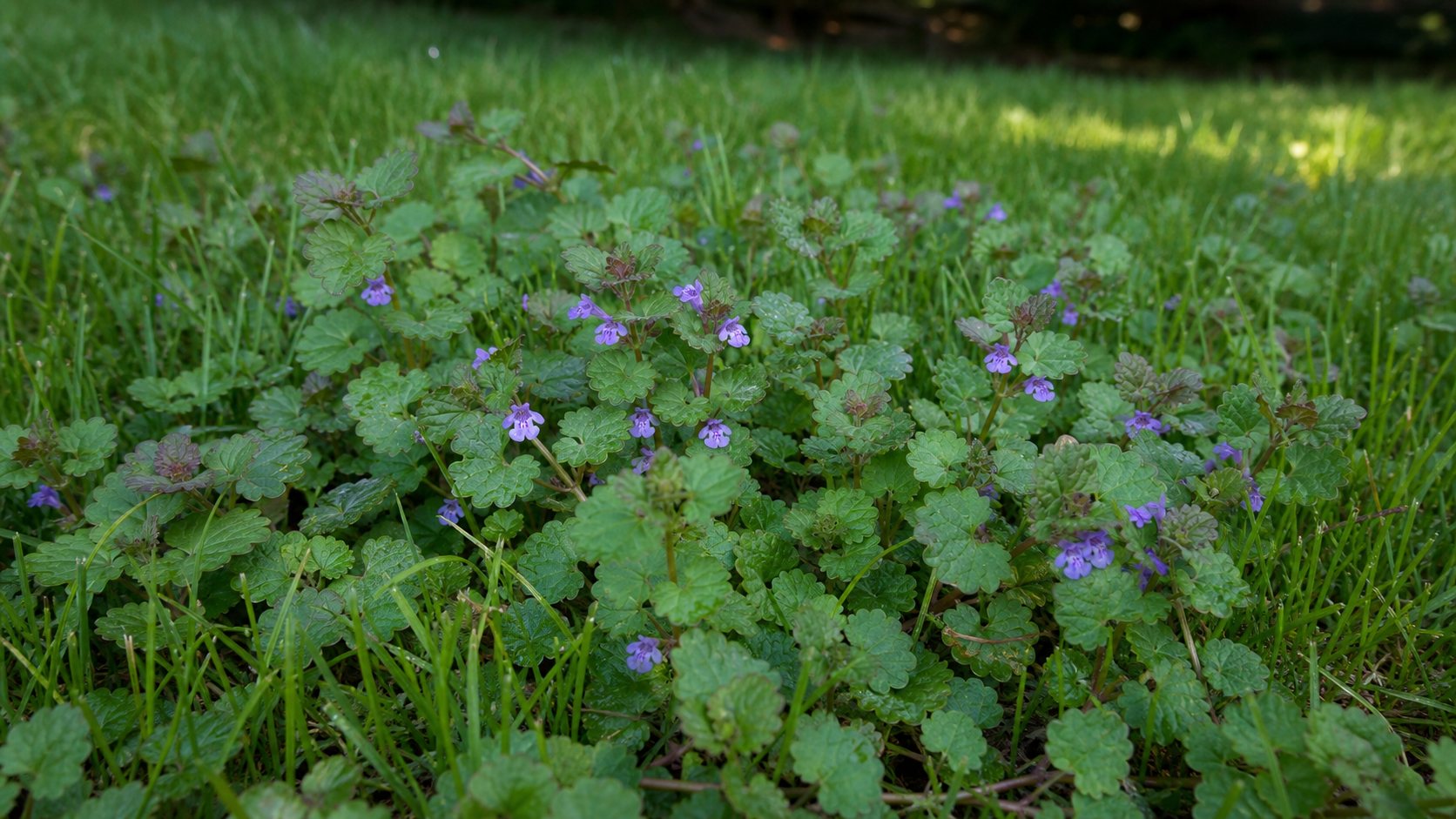
The plant produces small, round to kidney-shaped leaves with scalloped edges and a distinctly minty aroma when crushed. In spring, it flowers with tiny purple-blue blooms, which help with early identification. While it may look attractive at first glance, it aggressively competes with turfgrass for water, nutrients, and light leading to patchy, uneven lawns over time.
What makes it especially problematic is its growth habit. Unlike annual weeds that die off each season, Creeping Charlie returns year after year from its creeping stem network, making it difficult to eliminate with a single treatment.
How Creeping Charlie Spreads So Quickly in Lawns
Understanding the spread mechanism is key to stopping it. Creeping Charlie reproduces both through seeds and vegetative stolons horizontal above-ground stems that root at each node wherever they touch soil.
Here is why it spreads so fast:
- Stolons root at every node: Each contact point becomes a new plant, so a single stem can produce dozens of offshoots in one growing season
- Shade tolerance: It thrives in areas where grass struggles, such as under trees, along fence lines, and north-facing slopes
- Low-moisture adaptation: While it prefers moist soil, it survives in drier conditions once established
- Herbicide resistance (partial): It can recover from mild treatments if not applied correctly or at the right growth stage
- Mowing spreads fragments: Lawn mower blades can cut and scatter stem fragments, each capable of rooting in new locations
- Rapid seasonal regrowth even after winter dormancy established root crowns push out new stolons as early as mid-spring giving it a head start over newly seeded grass.
The plant's stolons can spread several feet per season in ideal conditions, which is why early detection is critical.
How to Identify Creeping Charlie: Key Visual Traits
Proper identification prevents treating the wrong plant. Several characteristics distinguish Creeping Charlie from other common lawn weeds.
Feature | Creeping Charlie | Common Look-alike (e.g.,Henbit) |
Leaf shape | Round - scalloped edges | More elongated or lobed |
Stem type | Square stem - roots at nodes | Round or irregularly shaped |
Smell when crushed | Strong minty-herby scent | Mild or no scent |
Flower color | Purple-blue - small tubular | Pink-purple or white |
Growth habit | Creeping - low to ground | Upright or sprawling |
A simple field test: crush a leaf between your fingers. The strong mint-like odor is a reliable identifier. The square stem cross-section, visible when you snap a piece, is another defining trait shared across the mint family.
Best Conditions That Encourage Creeping Charlie Growth
Creeping Charlie does not invade healthy, dense lawns randomly. Specific lawn conditions create the entry points it exploits.
The primary conditions that favor its establishment include:
- Thin or bare soil patches: caused by drought stress, pest damage, heavy foot traffic, or disease
- Shaded lawn areas: where sunlight is insufficient for most turfgrass varieties
- Compacted soil: reduces grass root depth and creates ideal stolon-rooting conditions
- High soil moisture: overwatered lawns or areas with poor drainage see faster spread
- Low soil pH: acidic soils under 6.0 often correlate with higher weed pressure
- Poor lawn nutrition: nitrogen-deficient grass gives weeds a competitive advantage
Addressing these underlying conditions is just as important as any direct removal method. A lawn treatment without correcting the root cause will see Creeping Charlie return within one to two growing seasons.
Organic and Manual Methods to Remove Creeping Charlie
For homeowners who prefer chemical-free approaches, manual and organic control methods can be effective especially when the infestation is caught early or covers a limited area.
Hand pulling is the most direct method. Work after rainfall when soil is soft, and use a garden fork or hand weeder to loosen roots before pulling. The goal is to remove the entire stolon network. Any fragments left behind can re-root and restart the cycle.
Smothering with cardboard or black plastic cuts off sunlight to the affected area. Cover the infestation with several overlapping layers of cardboard or black plastic sheeting and leave it in place for four to six weeks during the growing season. This method works well for larger patches where replanting will follow.
Boron-based treatments are sometimes recommended as a natural herbicide alternative. Borax dissolved in water and applied carefully to affected areas can suppress Creeping Charlie. However this approach requires precise dilution because excessive boron concentrations damage surrounding soil and grass. It is a last-resort organic option.
Improving lawn density through overseeding bare patches, aerating compacted soil, and top-dressing with compost reduces the open ground Creeping Charlie needs to establish.
Solarization clear plastic sheeting traps heat beneath raising soil temperature high enough to kill stolons and seeds. Works best during peak summer months.
Dish soap spray one tablespoon per quart of water applied directly to foliage breaks down the waxy leaf cuticle causing dehydration. Weakens surface growth between manual removal sessions.
A thick healthy turf is the most sustainable organic defense available and combining two or three of these methods together delivers far better results than relying on any single approach alone.
Herbicide Treatments That Actually Work Against Creeping Charlie
When manual methods are insufficient or the infestation covers large areas - selective broadleaf herbicides become the most reliable solution.
The most effective active ingredients for Creeping Charlie control include:
- Triclopyr: one of the most effective options specifically against ground ivy; disrupts cell growth in broadleaf plants without harming established grasses
- Dicamba: often combined with 2-4D and MCPP in three-way herbicide formulations for broader weed control
- 2,4-D: targets a wide range of broadleaf weeds and is commonly found in combination lawn weed killers
Timing matters significantly. The two best application windows are:
- Spring: when Creeping Charlie is actively growing and flowering (high metabolic activity increases herbicide uptake)
- Fall (September to October): when plants begin translocating carbohydrates back to roots, which also carries herbicide deeper into the stolon system
Fall treatment is generally considered more effective for long-term suppression because the herbicide travels to the root network rather than just affecting surface growth.
Always follow product label instructions regarding application rates, dilution ratios and reapplication intervals. Most cases require two to three treatments spaced two to three weeks apart for full control.
Long-Term Prevention Strategies to Keep Creeping Charlie Out
Killing existing Creeping Charlie is only half the solution. Prevention is what keeps it from returning the following season.
A consistent lawn care routine built around these practices creates conditions where Creeping Charlie struggles to compete:
- Mow at the correct height: cool-season grasses like Kentucky bluegrass and fescues should be maintained at three to four inches to shade out weed seedlings
- Fertilize on schedule: a well-fed lawn with adequate nitrogen density naturally resists weed encroachment
- Core aeration annually: reduces soil compaction and improves root depth for grass
- Overseed bare patches promptly: never leave soil exposed for more than a few weeks during the growing season
- Improve drainage: in persistently wet areas consider grading adjustments or installing French drains
- Choose shade-tolerant grass varieties: in low-light zones fine fescues or creeping red fescue outcompete Creeping Charlie under tree canopies
- Apply pre-emergent herbicide in early spring - products containing isoxaben or dithiopyr prevent Creeping Charlie seeds from germinating. Apply before soil temperatures reach 55°F
Regular monitoring from early spring onward allows you to catch new growth before it becomes established.
Final Thoughts
Creeping Charlie is one of the most stubborn broadleaf weeds a homeowner can face, but it is far from impossible to control. The real key is treating it at the right time, specifically in fall when the plant is actively moving nutrients to its roots, making herbicide treatments far more effective. Pair that with manual removal for smaller patches, fix the shaded or compacted soil conditions that welcomed it in, and overseed bare areas promptly.
A thick, healthy and well-fed lawn is ultimately your strongest and most sustainable defense against Creeping Charlie coming back season after season.
FAQs
What Kills Creeping Charlie Permanently?
Triclopyr-based herbicides applied in fall are the most effective option for long-term control. Two to three applications combined with overseeding after treatment prevent regrowth.
Does Vinegar Kill Creeping Charlie?
Household vinegar can burn the surface foliage but does not kill the root system or stolons. It may temporarily reduce visible growth but will not eliminate an established infestation.
Will Mowing Remove Creeping Charlie?
Nomowing can actually scatter stem fragments that re-root in new areas. It keeps the plant low but does not control or eliminate it.
How Do I Know If I Have Creeping Charlie Or Another Weed?
Crush a leaf and smell it. Creeping Charlie has a distinctive minty-herbal scent. Also check for a square stem cross-section and round scalloped leaves.
Is Creeping Charlie Harmful To Pets Or Children?
The plant itself is not considered highly toxic but always waits for herbicide-treated areas to dry fully before allowing pets or children back onto the lawn. Follow product label safety guidelines.
When Is The Best Time To Treat Creeping Charlie?
Fall, specifically September through early October, is the optimal treatment window because the plant is moving nutrients to its roots which carries herbicide deeper into the stolon system.
Can Creeping Charlie Grow In Full Sun?
It prefers shaded or semi-shaded areas but can establish in sunny spots when grass is thin soil is compacted or moisture levels are high.
How Long Does It Take To Get Rid Of Creeping Charlie?
A complete elimination program typically takes one full growing season involving two to three herbicide applications and follow-up overseeding to close bare ground.
Does Pulling Creeping Charlie By Hand Work?
Hand pulling works for small early-stage infestations when done after rain. Complete stolon removal is critical any fragment left in soil can regenerate a new plant.
What Grass Types Resist Creeping Charlie Best?
Dense vigorous grasses like tall fescue perennial ryegrass and Kentucky bluegrass resist invasion well in sun. In shady areas fine fescues or creeping red fescue outcompete ground ivy more effectively than other varieties.